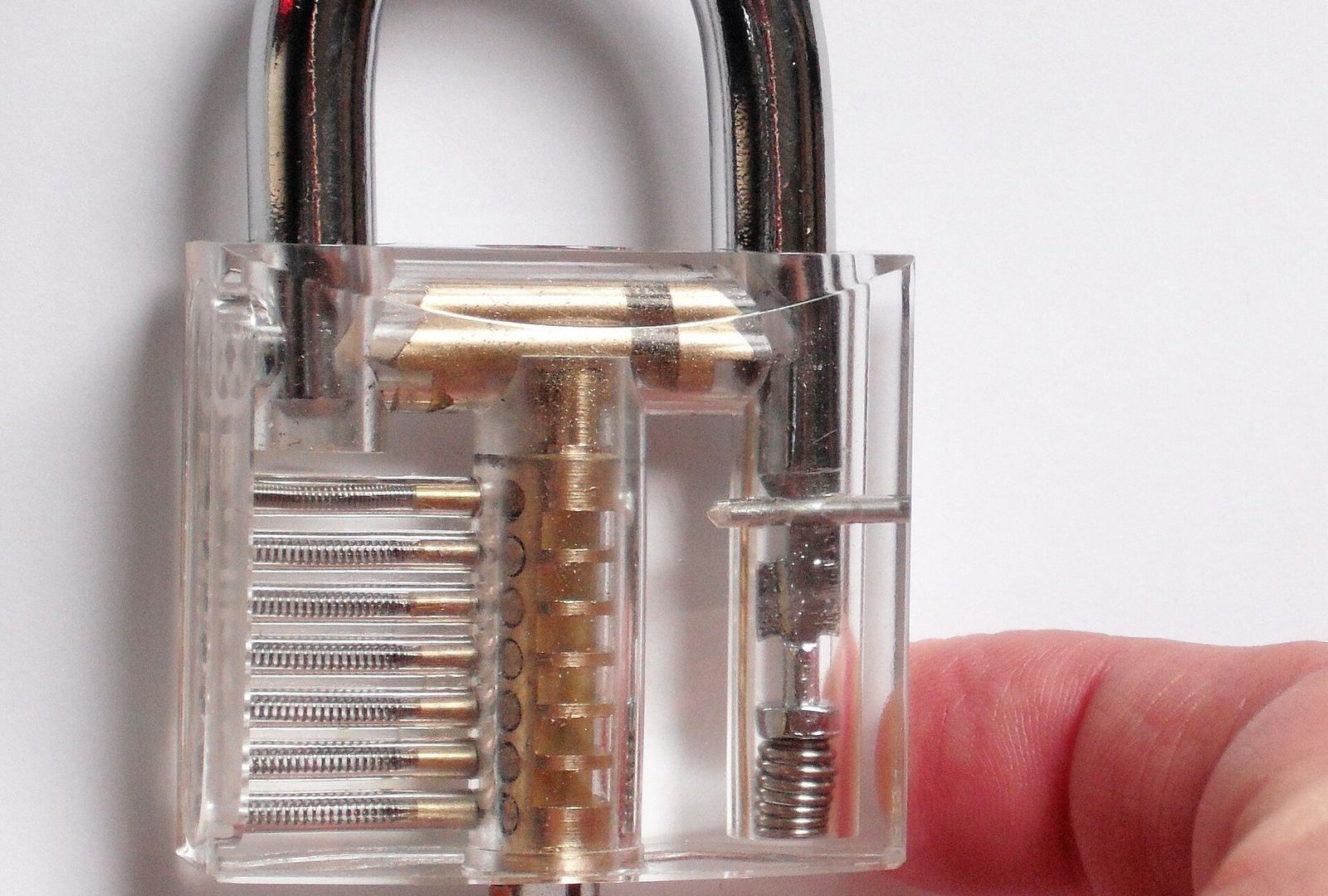
Most household locks are pin tumbler locks. A set of pins sits in the plug, each split into a key pin below and a driver pin above, and a spring pushes the driver pin down. With no key in the lock, the split sits across the gap between plug and housing, and the plug cannot turn.
A correct key lifts every split to exactly the same height. That height is the shear line, the line between plug and housing. With every split on the line, nothing blocks the plug, and it turns.
A pick works by lifting one pin at a time to the line, and a tension tool holds the plug under light turning pressure so the pin binds where it is set. A wrong key lifts some pins too far and others not far enough, and the plug stays locked.
Sources and further reading
Standards and laws change. Check the current version before you act on this guide. How we write our guidance